Thinking recently about the old Kiev, formerly at 7th Street and 2nd Avenue, I got a lovely circa 1980 shot from photographer
Michael Sean Edwards.
I took a shot on the same corner for comparison. At first glance, not too much has changed. The alterations seem subtle enough--the street signs have gone from yellow to green, the WALK/DON'T WALK is now an illiterate hand and man, Moishe's Bake Shop has a new sign that is today far from new.
 photo: Michael Sean Edwards, c. 1980
But other shifts are considerable.
A giant glass condo tower rises in the west. And, of course, Kiev is gone a decade now.
 today
today
The Kiev opened in 1978 and was a favorite of Allen Ginsberg, who dined there regularly. In 1982 he put it in a collaborative poem with Ted Berrigan:
"
I stood outside the Kiev tonight, nose pressed
to the plate glass, feet freezing
in city mush, and watched two aging lovers
inhale their steaming bowls of mushroom barley soup."
Then again in his own poem in 1986:
"I'm a fairy with purple wings and white halo
translucent as an onion ring in
the transsexual fluorescent light of Kiev
Restaurant after a hard day's work."
Ginsberg photographed many people in Kiev, including Philip Glass, Robert Frank, and Peter Orlovsky. He was also photographed in Kiev--here with East Villager Quentin Crisp in 1995:
 photo source
A June 1986
New York magazine article recalls the days when, on a Sunday morning, you could not get into the Kiev because the tables were jammed with customers. This was during a boom in Polish and Ukrainian coffee shops in the East Village, what they called a "Blintz-Krieg." Today, it's hard to imagine cheap Slavic food being a culinary goldmine here.
"Though the East Village seems in danger of becoming one huge art bar," says the article, "ethnic coffee shops prove that people there do not live on attitude alone."
At that time, three Polish coffee shops had opened in the last six months, bringing the neighborhood's total to over a dozen Eastern European diners. The magazine lists old-timers Leshko's and Odessa (a crowded "money machine"), then Polonia, Christine's, Lilian's, and K.K.'s, plus Bruno's, Teresa's, and Jolanta.
"They see us getting rich," said the co-owner of Christine's about his competition. Bruno of Bruno's agreed,
"There's a lot of money in Polish food."

Today, how many are left?
The Kiev closed in 2000 when the owner "got bored with it," according to an article in the
New York Times. He offered it to Tom Birchard of Veselka, who turned it down.
"Things changed," said Birchard. "I don't want to use the word yuppie.''
After that, I don't know exactly what happened, but the Kiev became a mysterious Ukrainian-Asian fusion joint, likely under new ownership, followed by some failed permutations called Go! Go! Curry! and The American Grill.
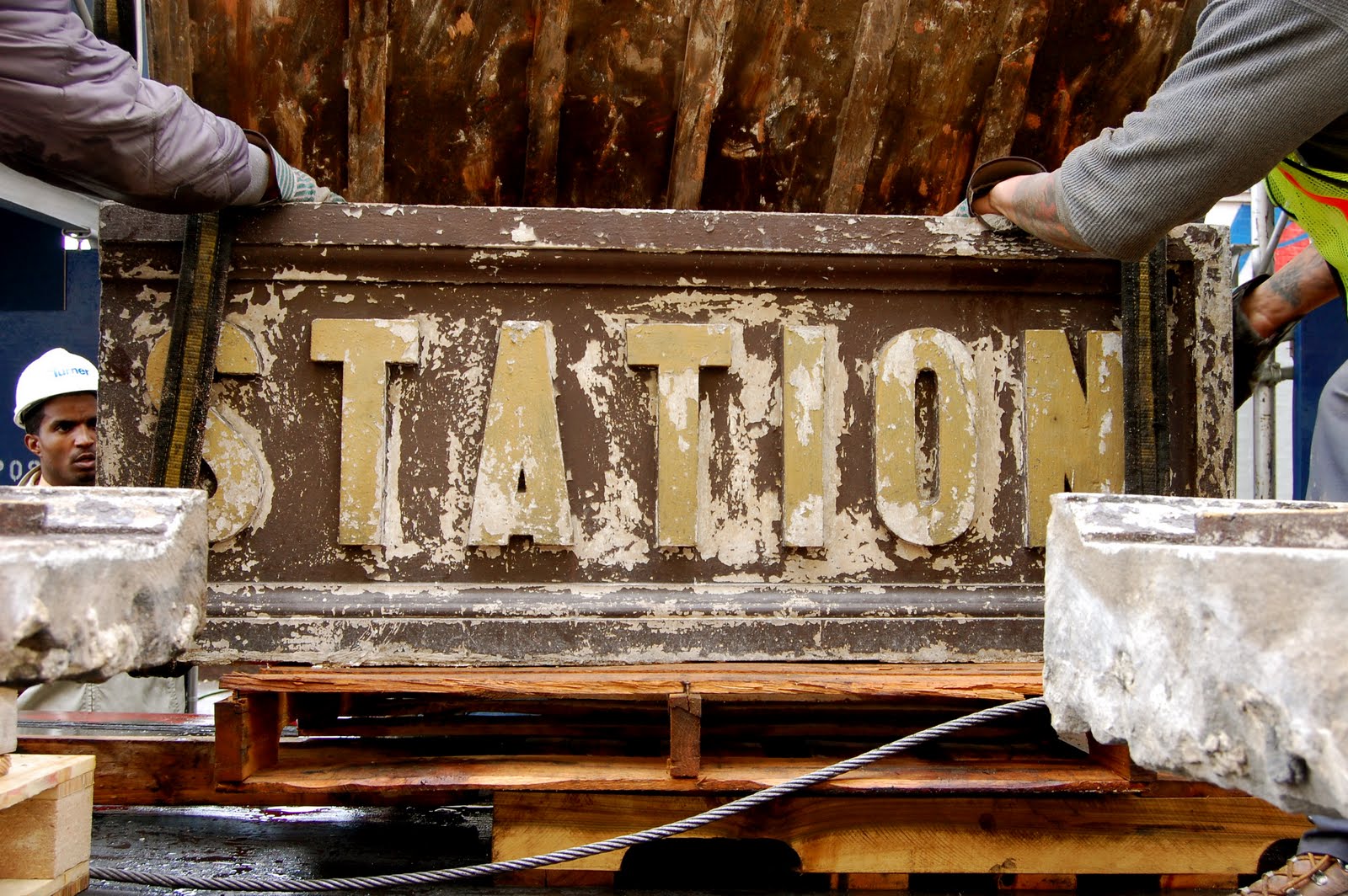
The old sign finally came down in 2008. Now it's not Kiev at all, but a Korean BBQ that no one (as far as I know) is bothering to write any poetry about.
See also:
New Polonia
Christine's
Teresa's