Showing posts with label art/books/film. Show all posts

Monday, March 23, 2020

Robert Herman

The man who jumped to his death from the 16th floor of his Tribeca apartment building on Friday night has been identified as photographer Robert Herman. He left a note that read, "How do you enjoy life?"


Since the 1970s, Robert was one of New York's consummate street photographers, capturing the day-to-day life of the sidewalks with his camera and, most recently, with his iPhone. I met him once or twice, we had a similar love for the city, and he was always lovely and kind. He will be missed, along with all the photographs he will never get to take.

What follows is an interview I did with him here in 2013, on the publication of his beautiful book The New Yorkers, a vivid collection of his work from 1978 - 2005.


all photos by Robert Herman

How would you say the city of today compares visually to the city you captured in your book?

The city I photographed in the early 80’s is almost gone. Back then, it was a city of small businesses and storefronts. Where I lived in Little Italy, the shop owners would invariably recognize you when you walked in. Soho today is mostly a mall made up of corporate stores. I miss the graffiti that made for compelling commentary when juxtaposed in a photograph. The city is safer today, and I like that, but it feels less quirky and less alive.


I like the signage of the small, old shops, the clutter, which is lacking in the chains' facades. What do you think is the visual difference between small, independent stores and big, corporate stores? And what is the feeling those visuals give you?

The difference between the corporate stores and the independents is that the look of the signage and displays are determined at a corporate level and done for multiple stores at the same time. The local store owner is creating the look for their storefront locally, and in reaction to the environment and neighborhood. All of this is obvious, but it is the independents that create the feeling of specificity of place: "only in New York."


When I hear "only in New York," I also think of the people--people looking interesting, doing interesting things that can't be seen elsewhere. Are the people of New York as inspiring as they used to be to your photographer's eye?

The big difference today is that so many people are looking at their phones on the street, which doesn’t make for a compelling photo. Also, everyone is much more aware of the power of imagery because of social media. It’s harder to make a candid picture these days. The iPhone is a good camera for that, because it doesn’t attract attention like a big DSLR. It doesn’t scream "camera!" I’m very excited about a new body of work I’ve been making with the iPhone over the past three years in New York and around the world.


Can you tell us about that work?

The iPhone photos began when I learned about the Hipstamatic app. I liked shooting in a square format and this was an opportunity to do that without using a medium format camera, as I had in the past.

I started using the iPhone/Hipstamatic when I was in Johannesburg about three years ago. I wasn't comfortable using a big DSLR when shooting on the streets. So, to ease myself into it, I made pictures with the iPhone and was pleased with the images I was getting. After that trip, I began shooting this way because sometimes changing the equipment sparks a new way of shooting. Presently, I'm having a book of these photos designed. It will be the follow up to The New Yorkers. A street photography book for the 21st century.

Street photography presents the same challenges regardless of the technology used to make a picture. Be it a Leica M or an iPhone or a Kodak Instamatic. That is, being observant and making strong pictures.


There's a Starbucks in one of them! What are your thoughts about having contemporary chains in your photos? Are they interesting in themselves as symbols of today's city?

Life goes on, change is inevitable. I like Starbucks' blonde. What can I say.

Tuesday, July 9, 2019

Michael Seidenberg

Michael Seidenberg, the proprietor of the great Brazenhead Books, has passed away. According to Facebook updates, he was in recovery from a heart attack and a bypass operation.


Family, friends, and fans are sharing memories on Michael's Facebook page. Their words say more than I can about a man that many remember as a one-of-a-kind New Yorker.

Brazenhead was a "secret" bookshop housed in an undisclosed rent-stabilized Upper East Side apartment, complete with a twice-weekly salon, open to all who could find it. I was fortunate to visit once before it closed in 2015. It was a truly magical place.


Tuesday, October 9, 2018

New York From Behind

If you enjoy New York street photography and the unique character of this city, there's an Instagram page you should check out. New York from Behind is the creation of Bryn and Justin. I asked them a few questions about their project.

What is New York From Behind?

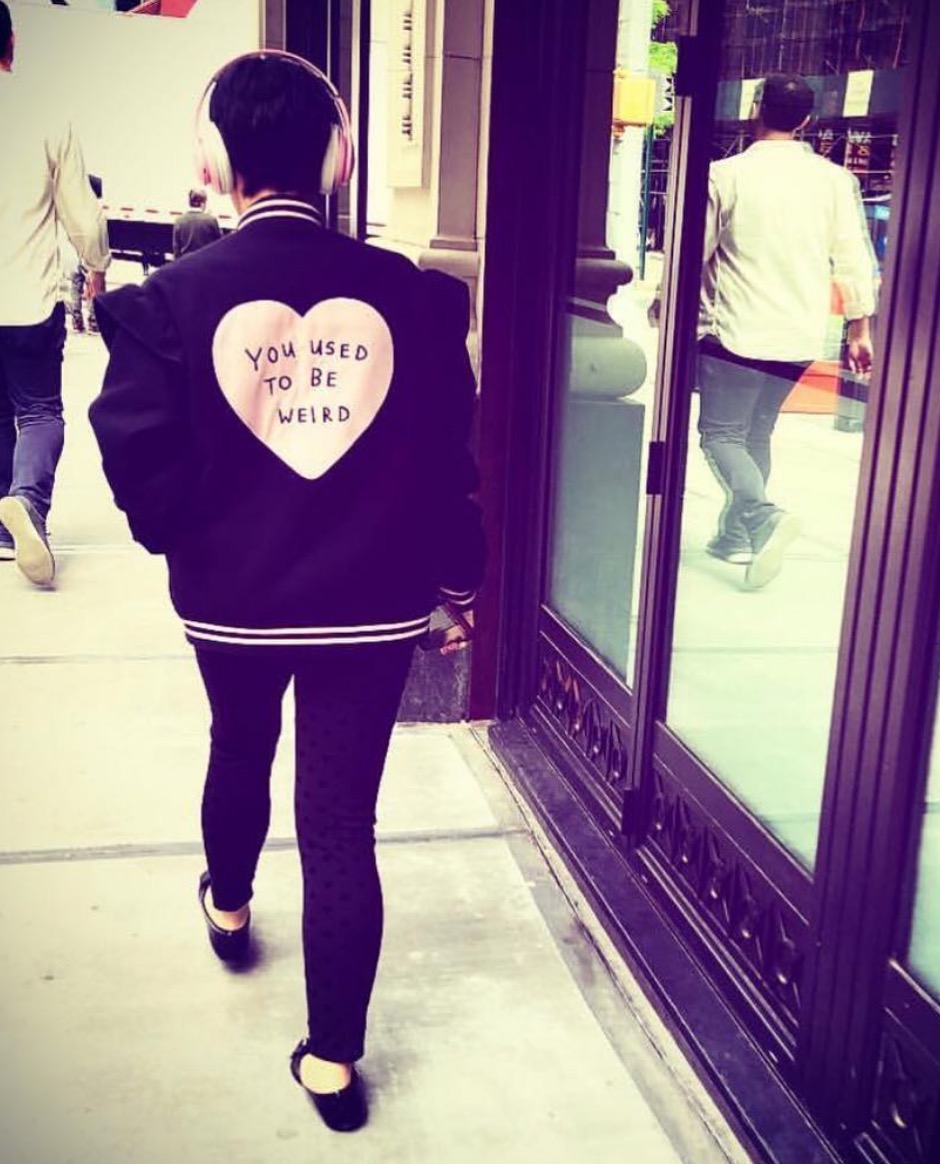
New York from Behind is a concept we created just by being citizens of this city. New Yorkers have a lot to offer visually and so often the most interesting thing is the person right in front of you. Usually the front of someone’s outfit is what’s most interesting. We notice every day that the reverse is not true. Since so much of fashion is forward focused, it sometimes proves hard for us to find interesting content. So the fun for us is to catch people who do something different and make their canvas their backs as well as their fronts.


all photos via New York from Behind

How'd you get started?

We’re two good friends who first got started by taking pictures around the city and sharing them with our friends and each other. Eventually, we started the page as a place to more easily share photos of people who were doing fashionable, interesting, and funny things on their backs. People started following the page. As a born East Villager and a young curmudgeon, we have a sense of NYC history and it’s fun to find the colorful people of the past, who are increasingly hard to find in generic New York.


Do you go out hunting for behinds, or just snap them as they come?

Usually our daily commute offers enough content, especially if you hit 14th street, Soho, Union Square, Washington Square, the West/East Village, and Chelsea. There are always events around the city and holidays that we can count on for good “behinds.”


What trends have you noticed?

When we started in 2016, few people had messages on their backs and most of the ones who did seemed handmade. Now so many retailers are selling clothes with words written across the back and it’s spread from high fashion, where it started, to mass retail.

The other trend we’ve noticed is that patterns on clothing were always forward focused. You’d see the person approaching and while their front is highly embellished, the back is solid. Lately we’ve seen more of designs continuing on to the back as well.


A lot of the behinds seem to be messages. Thinking over all the behinds you've captured, what are people trying to say?

From “never settle for less than your best” to “live fast eat ass” a lot of them are messages to onlookers — words of advice, lessons learned the hard way, or generalized warnings of toughness. And those are just the ones with words that makes sense.

Friday, June 22, 2018

High-Rent Blight Monopoly

You may have seen them popping up on high-rent blight around town. Monopoly cards pasted to the windows and walls of shuttered shops. They list outrageous rents and come with a Jane Jacobs quote.


They're the creation of an artist called Symbol. I asked Symbol to explain the project and what inspired him to do it. He told me:

"Everywhere I walked in Manhattan there were empty storefronts, and it seemed like one big game between landlords and tenants. All these landlords waiting for a pharmacy or bank to sign a 10-year lease. Is there a better analogy for that then the game of Monopoly?

Seems like no one really wins at Monopoly but everyone just tires out. All the little stores just seemed to disappear. There were no replacements and Manhattan lost its juice. Bleecker went from high rent/Sex and the City famous to an empty side street.

The signs on Lexington are Amazon-colored orange. The online shopping has only added to the problem and added to my tipping point. Yeah, I can buy cufflinks on Amazon but where's the fun of wandering into some old lady store and finding a cool pair? Same thing with flea markets. Sure, it was mostly crap, but it was fun crap.

I'm not sure what the answer is and I doubt the politicians can deal with what is essentially a free market issue. Hence the Jane Jacobs quote. I'm an artist in a different medium and I wanted to make a statement instead of crying about what was happening. (And buying a box of Kleenex on Amazon Prime.)

I grew up idolizing the city from nearby and have lived here for some time. Every kid growing up just outside of Manhattan has that same feeling. Let's go to the city are the words that are electrifying. I mean anything could happen on a Friday or Saturday night and usually did. Fell in love, danced, drank, got lost, ate at a now closed diner, ended up at home as the sun came up and before my parents woke up.

I hope kids still feel that way. I don't. You want fun? Move to the boroughs."

You can find more Monopoly cards on Symbol's Instagram page


This is actually not a free market issue, although the politicians and real-estate industry want us to believe that. As I explain in detail in my book, Vanishing New York, the market isn't free. It's rigged heavily in favor of big developers and landlords, giving them tax breaks and other incentives, and it works against small business people. There are many things that can be done to remedy this. One is the Small Business Jobs Survival Act.

If you want to stop massive commercial rent hikes that put small businesses out of business, take action:

- Write to the mayor and ask him to support the Small Business Jobs Survival Act (SBJSA). Here's a quick form you can fill out in just a few easy steps.

- Write to Council Speaker Corey Johnson and ask him to support a strong SBJSA and bring it to a vote. Here's a quick and easy form for that, too.

- Here's more you can do.

- And talk about it. Talk to your friends, family, and co-workers. Tell them that mom and pops aren't vanishing "because of the market" or "all because of the Internet," they're vanishing because the city and state support landlord greed -- but this can change. There are solutions. The first step is raising consciousness. We have to imagine a different city.


Monday, April 30, 2018

Gargoyle Hunting

On a warm spring afternoon I meet John Freeman Gill on the Lower East Side for a little gargoyle hunting. Gill is the author of The Gargoyle Hunters, a novel set in 1970s New York City about a boy and his father who rescue ornamental stonework from tenements and other old buildings under demolition. For the father, it's a way to preserve a vanishing city.

"The book is completely about the evolving streetscape of New York," says Gill. "The city is constantly destroying itself. Regenerating. It's always been a city in a hurry."


Gill's inspiration for the book was a man named Ivan Karp, a self-taught gargoyle hunter who put together a team in the 1950s and led "clandestine raids on demolition sites." It was the time of Urban Renewal when countless tenements were destroyed, taking their decorations with them. Karp saved some 1,500 sculptures and eventually got the Brooklyn Museum to take them in.

Since the days of Urban Renewal, housing for low-income people doesn't come with much in the way of beauty or aliveness.

Gill and I are standing on Madison Street and Rutgers. On one side are tenements, covered in ornamentation--demon faces, cherubs, sea monsters, nudes. Their first floors are full of businesses like bodegas and Chinese restaurants. The sidewalk is busy. Across the street are the public housing towers that came out of the 1950s. They are dull and drab. Little life occurs at their feet.


Decorating tenements wasn't an act of landlord generosity--it was a marketing tool, says Gill. "The goal was not to create beauty, it was just to dress up shabby housing for the poor. It makes it look fancier than it is." Still, the decorations made for a livelier streetscape, one much less homogeneous than what we have today.

"You can feel the imprint of the individual in the object," says Gill. Then he points across the street at the housing projects. "These monstrosities are just boxes for housing low-income humans."


On the tenements, the ornaments generally come in two types: terracotta and stone. The terracotta pieces, Gill explains, were produced in a factory. The stone pieces were carved. How to tell the difference? Terracotta works tend to be sharper, while stone pieces are more likely worn away by time.

Many men among the nineteenth-century immigrants who came to New York were stone carvers. "They carved the monuments, the statues and gravestones, of Europe," says Gill, and then they carved the monuments on the faces of the tenements built for them to live in. "These gifted carvers are decorating their own housing. "

The architects didn't specify on the blueprints what decorations they wanted. "They'd just write 'carving,' and then the foreman might say 'Give me a Mary' or 'Give me a Moses,'" generic terms for a type of male and female face. "So the carver would do what he wanted. They'd carve each other's faces. Or the cop, the barkeep, or a girlfriend. So when you look up at these buildings, you're seeing the New Yorkers of the late nineteenth century looking back at you."


This stuff is in Gill's DNA. His mother, Jill Gill, was a gargoyle hunter. A self-taught artist, she painted street scenes as they were vanishing, and when she came across a forsaken ornament from a demolished tenement, she'd load it into her baby's stroller and cart it home. "My mother was obsessed about this," says Gill, but he didn't pay much attention to it in his youth.

It wasn't until he started writing for the New York Times' City Section that he "Gravitated toward historic preservation." Now, he says, "The ephemeral nature of New York's cityscape is my eternal fascination."


He wants to make it a fascination for his readers, too. "New Yorkers never look up," says Gill. And there is so much they're missing. The carvers of the past "incised their imagination onto our streetscape. They turned the streets of New York into marvelous public art galleries."

After you read The Gargoyle Hunters, you might find yourself looking up more often.


Read more about The Gargoyle Hunters and find out where John will be next


Monday, April 16, 2018

Guys at the Cafetal Social Club

On a warm spring day outside the Cafetal Social Club at 285 Mott Street you might find the filmmaker Paul Stone and his adopted family, including neighborhood guys like Vinny Vella, aka "the Mayor of Elizabeth Street," and Dominick Ferraro.

For over 60 years the Cafetal was a social club. It's been a home-style Italian restaurant for 6 years. The guys hang out on the sidewalk to drink coffee, shoot the breeze, and reminisce about life in old Little Italy, childhoods spent sleeping on fire escapes and showering in fire hydrants with bricks of Ivory soap.


Stone, a half-Italian, half-Irish native of Brooklyn, moved to Elizabeth Street in 1985. He lived in Martin Scorsese's building, played in punk bands, and made movies. In Mulberry: A Gentrification Story, he shows how the neighborhood changed in just a few short years.

"A few years ago," he says, "it went from slow gentrification to hyper-gentrification. The dial got turned way up. It was a combination of what Giuliani started and Bloomberg finished. Giuliani cleaned it up for the billionaires."

Too often now the place is called Nolita, for North of Little Italy, a nickname invented by the real estate industry to raise prices. I ask Vella, "What do you think of Nolita?" He says, "Nolita? I don't know her."

"I'd like to get the guy who did that," says Dominick.

"This is Little Italy," says Vinny. "If you don't like it, go back to Ohio or wherever you came from."

For Stone, living in Little Italy and then on the Bowery in the age of hyper-gentrification was making him cranky. The new people were clueless and rude. He was angry all the time. Then he made Mulberry and it connected him back to his roots. To these guys. "Now I have this family," he says, "and I don't notice the other stuff so much. The movie rejuvenated my whole outlook toward the neighborhood."

That's connection. Community. Something the guys remember as an important part of the old streets. The new people, they say, don't say hello. It wasn't always like that. Vella used to haul out garbage cans and close Elizabeth to traffic. Neighbors would bring out their lawn chairs and kiddie pools. They'd barbecue and play music.

"Now there's no more sitting in front of the buildings," says Dominick. The new owners won't allow it. And you can't go up on the roof either. No more Tar Beach. "That was an important part," he says, about life in the city. "We used to sit out 'til two, three in the morning. Your daughter or your son could walk out and people would watch out for them. In the '70s there was a wiseguy who lived on the first floor. His wife would lean out the window. She said to me, 'The day you guys are not on this corner, that's the day I'm moving out.' And this was a wiseguy's wife. Without people sitting out, it's not a neighborhood."

Vella interrupts, "You know what my mother used to say about people who talked too much?" He says it in Italian, something like mangia il culo del cavallo. "He eats the horse's ass."

Before anyone can figure that one out, the punk poet Patti Smith walks by in a red flannel shirt and jeans, long white hair flowing out behind her. The guys talk about the celebrities they've seen here: Leonardo DiCaprio, Gabriel Byrne, David Bowie. Little Italy has become one of the priciest neighborhoods in America and the old people are being pushed out, bought out with cheap money or just given the boot.

It's safer now, of course, and the guys appreciate not having to run for their lives anymore. "But we sacrificed the soul for safety," says Paul.

"I miss the smells," Dominick says. "On a Sunday morning, every building had a different smell. You could smell the Sunday gravy. Everywhere you went, you felt like you were in your living room. Even now, as soon as I get into the neighborhood, the temperature drops. Like I'm in my living room. It's weird. I guess it's psychological, but it really happens."

They've made the best of it. Vella likes watching the models walking by. Dominick likes the shopping--and not getting hassled anymore by Irish cops.

"Things have always changed in the city," Paul says, "but the hyper-gentrification is the scariest part. That's the stuff we need to fight."


Mulberry - A Gentrification Story. from Paul Stone on Vimeo. Also check out Stone's short film "Tales of Times Square" (NSFW). His latest, "Big Elvis," premieres next week at the Tribeca Film Festival.

Wednesday, March 28, 2018

Boho's Lament

Filmmaker Dustin Cohen has made a poignant short film about the dying soul of New York with one of the last of the original East Village bohemians.

He writes: "I met Phillip Giambri at Grassroots Tavern (R.I.P.) on St. Mark's Place during the summer of 2016 after hearing him perform at an open mic in the East Village. He drank me under the table that afternoon, but not before we agreed to collaborate and bring his poem 'The Boho's Lament' to life."


Giambri was a Grassroots regular. He was written up in the Times a couple of years ago as "the Ancient Mariner, being a Navy veteran and as relentless a storyteller as Coleridge’s salty narrator."

As Cohen notes on the film's Vimeo page, Giambri "has been writing and performing in New York City's East Village since 1968," and you can find him "sipping cheap drinks and waxing philosophical at the some of the last remaining real East Village dive bars like Coal Yard, Doc Holidays, 7B, and International Bar. He hosts an open mic on the last Wednesday of every month at Three of Cups Lounge on First Avenue." (Which will also close, on April 1 -- so tonight is the last night of the open mic.)

You can also find him online.

Watch the video:


The Boho's Lament from Dustin Cohen on Vimeo.


Friday, March 16, 2018

Banksy's Back

Banksy is back in town. He unveiled a mural on the Houston Street wall today, urging the liberation of Turkish artist Zehra Dogan.

A Banksy rat appeared on a clock at 14th and 6th Avenue, atop the old Greenwich Savings Bank that will soon be torn down for luxury condos.


photo via Banksy

Now Instagrammers are finding more possible Banksy easter eggs around town, including one somewhere in East Harlem:


And another at Avenue I and Coney Island Ave -- both with a similar message for the capitalist class:

Monday, March 12, 2018

'99 Snapshots

The following is from photographer Michael Berman:

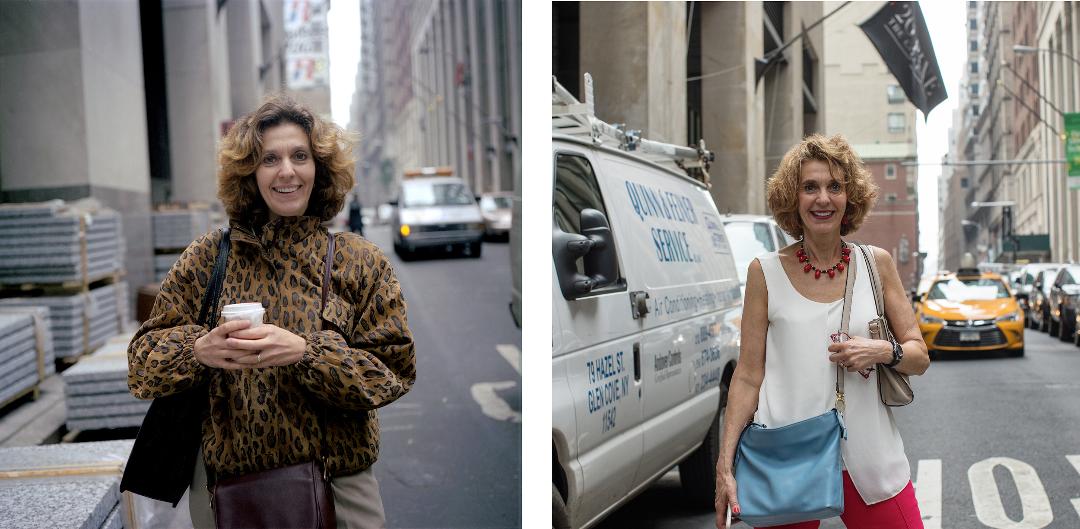
’99 Snapshots is a documentary project about people I met and photographed in 1999. I met them on sidewalks and in places of business in each of Manhattan’s many neighborhoods. I am now re-photographing and interviewing as many of the 300+ original people as I can find, seeking details about who they were in ’99, who they are now, and their thoughts on multiple topics including New York but also big ones like life and the passage of time. Because I encountered the people in 1999 randomly, the group as a whole reflects demographic diversity. I aim to turn this into a book and a documentary film.


Marian and Lindsay, Harlem

I’m able to find many people on my own, using social media and the phone book (I have their 1999 names). But some people I can’t find, so I post “ISOs” to the project’s Instagram feed, with hopes that people might help out.

Sometimes I find out that a person has died. If possible, I want to include them anyway. So I try to find out about them by speaking with people who knew them. I feel it's important to pay homage to who they were.

Here are a few examples from the project of people who I have found. There are more on the Instagram feed.


Nina, real estate broker. That might be the biz she’s in, but she has real problems with how much real estate costs have skyrocketed. She’s read “Vanishing New York." She acknowledges that the cost of an apartment in New York has increased too much for many people. When asked what could be done about this, she said: “Oh, god. I wish I knew. I don’t know if there’s an answer really. It used to be that city planning was a big thing. But now it’s all being done behind closed doors. The profit motive is just too strong, and it seems to outweigh everything.”


Abdul, food cart operator on lower Broadway. When I photographed him in ’99 he was one of only 2 small carts on the northern edge of what is now Zuccotti Park (then it was called Liberty Plaza Park). Now he’s across Broadway and he’s one of about 7 carts there. I asked him when it expanded to more food carts at that location and he said soon after 9/11, because tourists started coming and the area got a lot busier. He told me that several years ago he fell and injured his foot. Now he has a muscle that doesn’t work properly. He has health insurance but cannot take time off for surgery because recovery would be six months, and that would be time without income. He is married with 4 children.

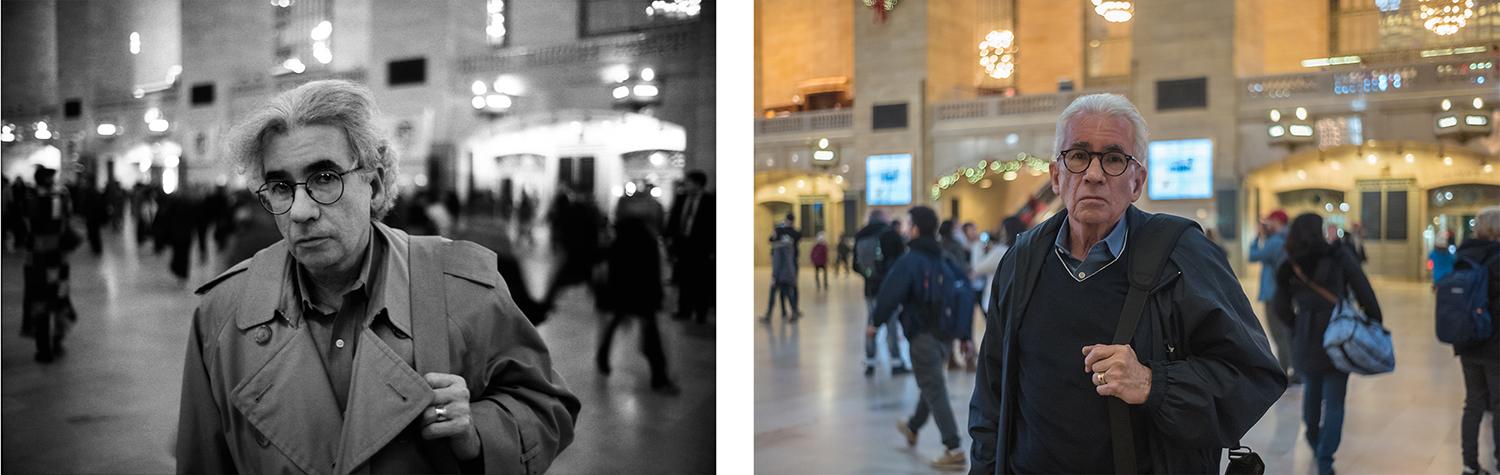
Here's Jon, an advertising exec on the creative side, waiting to catch his train from Grand Central in 1999. Jon now works from home in Connecticut and has his own small agency.


James, in 1999, worked at the Empire Diner. In 2018, he’s living in Park Slope, making paintings and working as a personal assistant.


Below is a photo of someone who passed away several years ago. When I photographed him in ’99, he said his name was Michael Peterson, but I believe he later went as Michelle Rostelli. Michelle was a regular fixture on the Lower East Side, and lived on Rivington Street. She loved making the rounds of the local businesses there. She helped herself to coffee and cookies at Sugar Sweet Sunshine, and they never let her pay. They have a memorial sign in her honor on the wall when you walk in.


If anyone who reads this knew Michelle/Michael well enough to talk about the person she was, please contact me to do an interview at michaelberman33@gmail.com. (Note: I prefer on-camera, and will ask you to sign a release.) I’m also told that there may have been a film about her. If anyone knows who the filmmaker is, or how to locate the film, I’d love to find out.

See more on Vimeo


Monday, January 8, 2018

Apocalypse Now

Feeling apocalyptic these days? Go see "Empire," the Lori Nix / Kathleen Gerber show at Clampart Gallery on West 29th St.


Photographs of post-apoc miniatures of the city present "a world transformed by climate uncertainty and a shifting social order as it stumbles towards a new kind of frontier."

It's oddly relieving to see it all fallen apart.

You'll also find a few of Nix's miniature sculptures on display, including a trio of abandoned hot dog carts and a scene of sidewalk newspaper boxes complete with rats and Chinese take-out containers.


The headline?

GLOOM, DESPAIR, AGONY, ENNUI

The show is up until January 27 and there's an artist talk on Saturday, January 13, from 3:00 – 4:00 p.m.

Thursday, October 26, 2017

One October

Rachel Shuman is the director of the film One October, a time capsule of New York in 2008, "when gentrification is rapidly displacing the working and middle classes, Wall Street is plummeting, and Senator Obama is making his first presidential bid." Along the way, radio host Clay Pigeon talks with everyday New Yorkers to "poignantly reveal urbanist Jane Jacobs’s idea of the 'ballet of the good city sidewalk.'"

One October will be screening on November 8, complete with a live score and discussion with the director, at the Rubin Museum. Buy tickets here.


I asked Shuman a few questions:

JM: You ended up with a film in which many people speak about the changes of the city, about gentrification and "mallification." Did you know you would get that? Was that the intention or an accident of sorts?

RS: The film was inspired by Chris Marker’s film "Le Joli Mai," which is portrait of his native Paris in the month of May 1962, a moment when France had just signed its peace treaty with Algeria after 8 years of war and while a big push for urban renewal was spreading around Paris. In the film Marker notes how the streets of his beloved city were changing, "In ten years, these images will look stranger to us than today do the images of Paris in 1900."

In the mid 2000's I felt like we were in a similar moment; we'd been at war in Iraq for several years and I began noticing the sweeping urban renewal that was happening in NYC, particularly in the East Village and Lower East side so I decided that I wanted to make a film like "Le Joli Mai" about my city to create a kind of time capsule of what was happening, in part to be able to remember of how the city looked at that moment in time.

By 2007 when I really started thinking about going ahead with the film, I was living in the East Village and had become quite alarmed by the rapid changes happing to the neighborhood. At that point it seemed like no one was really talking about it, so part of the impetus to make the film was also as a rallying cry to say, “Hey, do you see what is happening here?!”

A defining moment for me was standing on the corner of University Place at about 12th street late one night and noticing that all four corners were aglow in the harsh neon light of various bank façades. It was very eerie, and metaphorically I felt like a war was happening and that the enemy had managed to capture all four street corners and we were doomed….

So yes, when I set out to make the film I was very interested in finding out what people were thinking about the changes in city in that moment. And certainly by the time we were filming in October 2008, the changes had started to register and people expressed their feelings about it.


Clay Pigeon interviews Stacie who is worried that the changes in Harlem will push her out of the neighborhood.

JM: How do you think the city has changed between 2008 and today? (I noticed many of the buildings in your shots are gone. Demolished.)

RS: It seems that this pace of hyper-gentrification, as you call it, has just become more accelerated. Whole blocks have been completely taken over by outsized luxury condos and mega-chain franchises.

In thinking about this interview, I decided to take a walk through some of the neighborhoods that we filmed to see specifically what had come of some of our locations. The most shocking change is a vacant lot that Stacie, a worried mother in Harlem, mentions in the film. She predicts that in six months to a year it will become a Marshalls or a Gap and says, “In five years I won’t even be living here no more.” Indeed she understood what was happening cause that spot is now home to the new Whole Foods in Harlem and Marshalls is across the street. Of course as you know many other spots are gone too, the Mars Bar is now a TD Bank.

The banks are absolutely everywhere! Corporate sponsorship seems to dominate every event.


The vacant lot where Stacie is standing in Harlem in October 2008.

JM: What made Clay Pigeon right for this project?

RS: In the Marker film, the interviewer is not a character and is almost never seen, but I knew that I wanted to cast the role of interviewer in the film and one night a friend of mine who used to have a radio show on WFMU suggested I listen to Clay’s "Dusty Show" and within the first few minutes of hearing his show I just knew he was the person I was looking for. Since an inherent part of Clay’s radio show is his interviews with strangers on the street, I chose to follow him as he was doing his normal rounds and some of the interviews that are in the film were also broadcast on WFMU as part of his show. I did talk to Clay about the themes in my film, but we have a lot of overlap in that regard so it was a natural fit for him to incorporate some of my questions into his conversations.

Clay is from Iowa and he talks about how being from a small town really informed his approach to interviewing. He says that growing up he was always stopping to chat with people on the street and I think it fostered his genuine curiosity about people. He’s not afraid to ask difficult questions. Some may call them probing or invasive, but that’s not what motivates him. He connects on a human level and he has a lot of compassion for people and their stories.

The other appealing thing was that though Clay had been doing his show for ten years (mostly outside of NYC) he had only moved to the city a year before we began filming and he was still kind of in awe of the place. I loved seeing the city through his fresh eyes cause part of my mission was not only to show the changes that were happening, but also to film the things I loved about the city as a way of preserving them.


That corner lot is now home to the new Whole Foods in Harlem.

JM: There is a sense of hope in the film -- that Wall Street's corruption will be defeated, that New York will be saved -- so where are we now?

RS: In all honesty, things seem much worse now. As your readers know well, hyper-gentrification and corporatization have taken over most corners of the city. And politically…well, I can’t even touch that. Even though the film does rest on some optimism about Obama, there is a lot of tension there and I feel like the film actually foreshadows a bit of where we are now. But I do think we need to take the long view.

At the beginning of my film I have a quote from "Harper’s Monthly," from 1856, that says, “New York is never the same city for more than a dozen years altogether.” So change is the nature of this beast, but I do agree that this wave of change is unlike any other the city has seen. It’s not the Jews replacing the Italians replacing the Irish; it’s of an entirely different order.

As citizens, we will have to work hard to shift the direction it’s going. But I do like to think of Roberto in the film who in his 83-year-old wisdom says that every 100 years or so everything comes back around and repeats itself. It reminds me that this particular phase of the cycle won’t be where we are forever.

And as Clay says in the film, for those just arriving, "these are the good old days."


Mars Bar then...


...and now

Monday, October 23, 2017

Tales of Times Square: The Tapes

Author and musician Josh Alan Friedman was working for Screw magazine, covering the Times Square beat through the late 1970s and early 80s, when he wrote the cult classic Tales of Times Square.

Recently, he dug up the tapes he made from that time--interviews with the denizens of the old Deuce--and turned them into a podcast. Tales of Times Square: The Tapes takes you back in time through the voices of "strippers, old fighters, burly-Q men, peep show girls, hustlers, cops," and one man who ran the penny arcade at 42nd and 8th since 1939.

I asked Josh a few questions.


All photos via Josh Alan Friedman's blackcracker

You've had these tapes for decades. What inspired you to digitize and turn them into a podcast now?

Two years ago people started asking if I was involved with The Deuce going through on HBO. So I offered to contribute but they wouldn’t take our calls. My wife, Peggy, said, "What about all those cassettes you recorded back in Times Square?" Stacked on the wall among hundreds of others. I’d forgotten about them, just scratch tapes. But she told me to digitize them before they dissolved. I’d just finished my last album, working from Logic Pro on my home computer. So I was able to formulate a podcast. I’m still not sure what’s workable, but I’ve managed six episodes so far. It’s spinning off differently than Tales of Times Square, the book. Hindsight and the fate of these characters.

What will people find in the tapes that they can't get from the book?

It’s startling to hear the ghosts of old Broadway come back alive. Voices were different then, like Edward G. Robinson or Cagney, see. Unnerstand? That beautiful New Yorkese, the Damon Runyon lingo you might remember from Guys & Dolls.  

Tales of Times Square came out in ’86, after a decade spent covering the Square. It’s had four different editions and a cult following--some of these readers are giddy to finally hear the actual voices—as well as seeing their pictures on the podcast site, BlackCracker.fm.


Seedy old 1970s Times Square is enjoying a revival, especially through The Deuce. What do you think it is about that place that draws so much interest?

Right after the Times Square Redevelopment Corp. and the Shuberts finally condemned the theaters on 42nd street, they approached the great Broadway composer, Cy Coleman. They were rebuilding the New Amsterdam, the Lyric (Foxwoods), and The Selwyn (American Airlines Theater). They told Coleman they wanted to designate the whole street for musicals only, get people back on 42nd Street. Coleman said he had a great idea. Great, whaddya got? Pornography.

His hit musical, The Life, played the Ethel Barrymore in 1997. Pimps and hookers, all singing, all dancing. Right after they’d eliminated all of it from the street. A future episode of my podcast is with Cy, who we lost a while back.

Nostalgia is easy once the danger is gone. During the years I spent in Times Square, I felt the dying embers of Old Broadway, a century of show biz, which was invented there. I loved the old days. And I guess I also loved the incoming Live Nude Girls, the peeps and burlesque; the way it intersected and cross-faded with old Irish bars and delicatessens, the faded glamour and Joe Franklin’s office. High life and low life, side by side. Of course, some of it descended into utter depravity on the street. What I hoped for was a compromise. Dial back some of the depravity, but keep a red light district in Times Square. Even if just one block, say 42nd between 6th & 7th, keep just one block for the millions of us who require a little decadence to stay sane. The city can have 50,000 other blocks for corporate domination and chains. But no, they had to bulldoze everything, to get rid of the social ills. No more ghetto entertainment or sex or urban spontaneity. A whole culture eliminated.


Why do you think people today are so nostalgic for 1970s Times Square? Is it a response to something lacking in the present moment?

The grit, the grime, and the attitude have been wiped clean. Is it possible that some millennials are beginning to realize that this total corporate domination and soulless architecture has a downside? Like no more wild west--which is what Times Square was. Pornography is not sex--but Times Square sex was a lot more interactive than internet porn. Neon is more beautiful than Godzilla-sized computer graphics. (But even neon was considered ugly and crass in the 1940s, by an earlier generation that preferred incandescent light bulbs). I say skip the nostalgia and bring it all back.

Listen to the tapes here.

Wednesday, October 18, 2017

Deconstructing the High Line

Next Tuesday, October 24 at 6:30pm, the editors of the book Deconstructing the High Line: Postindustrial Urbanism and the Rise of the Elevated Park will explore the after-effects of the popular luxury park, looking at gentrification along with causes and consequences of the “High Line Effect.” (See more description and info here.)


I asked co-editor Brian Rosa some questions:

What motivated you to "deconstruct" the High Line? When the High Line first opened, and for quite awhile, it felt forbidden to critique it in any way. Why this book now? How has the possibility of deconstructing the High Line opened up over time?

The genesis for this project was when Christoph Lindner and I first met at an authors’ meeting for a book he was editing, called Global Garbage, in June of 2014. We were wondering out loud why the reception of the High Line had been almost unanimously celebratory. Your op-ed in the New York Times from 2012, along with a few articles here and there, was the only critical work we could find on the topic, particularly in the design and planning fields. In the meantime, as we were going through the process of publication, more critiques began emerging.

I had been studying the High Line since I was completing a Masters degree in City and Regional Planning at Cornell University, and my PhD research in Human Geography at the University of Manchester was focused on the transformation of the spaces along and beneath the Victorian elevated railways of Manchester, England, and how they were implicated in the city’s attempt to reinvent itself as postindustrial.

The reimaging process of the elevated railway corridors in Manchester came along with quite a bit of property- and design-led industrial gentrification as these sites were gradually transformed from light industrial use and semi-abandonment to landscapes of leisure and consumption.

The whole time I was doing this research I would be asked about my opinions of the High Line, and my impression would be that we would see a number of the same dynamics, only on steroids because of the intense real estate speculation that defines urban redevelopment in New York City.


What do you think made the High Line so resistant to critique?

I think the High Line eluded critique at first because it was not yet apparent the impact that its creation—and the rezoning that was integral to the city’s support of the project—would have on the surrounding areas of the Meatpacking District, West Chelsea, and the area which is now becoming Hudson Yards.

A particular concern of mine is how the High Line fits within the broader framework of rising economic inequality in New York City. Anyone reading the policy documents, along with Mayor Bloomberg’s and Amanda Burden’s support for the project, could have predicted that the High Line would stimulate property values, loosen height restrictions for luxury development, and cause widespread commercial displacement and residential gentrification. It is possible to have underestimated these impacts, but I think claims that the High Line had “unintended consequences” are at best naïve and at worst disingenuous.

One only needs to look at the economic justifications that undergirded the strategic documents that made the High Line possible to see that this was a project focused on priming the pump for further luxury development and the revalorizing of a district that had already gained attention and aesthetic prestige through its art galleries and adaptive reuse of industrial structures.

However, I do not think it was until the point that new buildings started going up, the experience of walking through a low-rise industrial landscape was diminished, and it became (as you called it) a tourist-clogged catwalk, that the backlash started finding a vocal presence in public discourse.


In an interview, High Line co-founder Robert Hammond recently said they "failed" to create the High Line for the local community. He has founded the High Line Network to help keep other "adaptive reuse" parks equitable and accessible. What are your thoughts on that project?

It was clear that Hammond received a lot of pushback from donor-members of Friends of the High Line because of his “the High Line failed” statement. I am a member of their email list, and I took note of the PR damage control email that was sent after that article was published. In essence, it said: “when I said the High Line had failed. I didn’t actually mean failed, just that we could have done better at addressing social equity issues from the start.” I agree completely, but I think it was worked into the very fabric of the project that issues of rising inequality would have to be sidestepped in order to see it through.

The area along the High Line has become among the districts in the United States with the highest levels of income inequality, with almost all of the only remaining low-income housing being in the public housing projects. The High Line played a huge part in this. If it weren’t for the projects and some moderate income housing in the form of co-ops, it would be exclusively for the wealthy at this point.

At the same time, I acknowledge that Friends of the High Line has become more focused on social inclusivity, and this is reflected in Danya Sherman’s chapter in Deconstructing the High Line. Along those lines, I am following the newly-created High Line Network with great interest, and will be discussing the topic at the NYU panel. I am trying to do so without cynicism, but it is very hard. Part of the problem is that so much of the discourse of “equity” is about inclusion and participation of traditionally marginalized, but short of making real demands for social justice.


Do you think it's possible for other High Line-inspired parks to be equitable, considering all the development that is attracted to them? If so, how might that be accomplished?

In reality, I don’t think such adaptive reuse projects can do anything but heighten socio-economic inequality in cities with high levels of property speculation, and I think it is doubtful to see such projects come to fruition if there is not a heavy element of market-rate property development incorporated into plans. In areas where there is less development pressure, the gentrification concerns might perhaps be lower, but at the same time there would be more difficulty in securing the sort of philanthropic funding required to create something like the High Line.

There is actually starting to be some real pushback against “vanity parks,” particularly those perceived to be driven by the personal ambitions of the wealthy: the Garden Bridge in London and “Diller Park” in Manhattan are a few examples of new, semi-private parks that have been defeated in the past year.

Bill de Blasio recently visited the High Line for the first time and seemed to refuse to give it any praise. This refusal was met with frustration from the press. What's your interpretation of that?

My interpretation of Mayor de Blasio’s choice not to visit the High Line until recently is that he has been positioning himself as a champion of neighborhood parks, particularly those in the outer boroughs which have been under-funded for decades. From my understanding, his administration has indeed shifted attention to such parks, which is to be applauded.

However, I would note that it is under his leadership that the management of Flushing Meadows-Corona Park has been passed on to a parks conservancy, making the largest park in Queens less public and more commercialized. It is an extension of the “tale of two cities” narrative that got him elected, but in the end his strategies toward issues like affordable housing are largely market-led. I think this is a folly. In many ways, in the dual sense of the word, the High Line is a folly too.

Tuesday, August 29, 2017

Poetry and Punk

This summer, Columbia University Press published Do You Have a Band? Poetry and Punk Rock in New York City by Daniel Kane. I asked Daniel a few questions about his book.


Q: You make the point throughout the book that poetry in the 1950s and 60s, specifically New York School and Beat poetry, was far more transgressive than rock and roll of that time. How so?

A: Well, poets could write things like "fucked in the ass by saintly motorcyclists, and screamed with joy" as Allen Ginsberg did in his poem "Howl," or publish a magazine entitled "Fuck You: a magazine of the arts," as Ed Sanders did, and kind of get away with it. Sure, these poets faced hassles with the law--Ginsberg's publishers were charged with obscenity, as was Sanders later on, but these charges were later dismissed. These poets set the stage for the literary freedoms we've enjoyed since.

Pop music at the time simply didn't have that kind of radical ambition or sense of possibility. Particularly in the late 1950s and early 1960s, American pop music was schmaltzy and safe--think Perry Como's [Correction: Pat Boone's] "Love Letters in the Sand." Even in the late 1960s the MC5 had to overdub Rob Tyner's cry "Kick out the jams motherfuckers!" with "Kick out the jams brothers and sisters!" before Elektra Records could distribute their first album Kick out the Jams to the hoped-for masses. Poetry was where the really transgressive action was taking place, especially the poetry that was happening in the Lower East Side. Examples are endless. Amiri Baraka's and Diane di Prima's works dedicated to taking down the State, Leonore Kandel's outrageously explicit erotic poetry, Aram Saroyan's bizarre one-word neologistic texts including one of my personal favorites, "lobstee"--we could go on and on.

Q: How did poets kickstart the punk movement in NYC?

A: Richard Hell, Lou Reed, Patti Smith--even Lydia Lunch!--all moved to New York City initially to be writers, not musicians. They had all read the Beats before they made the move, but living in NYC meant they could actually encounter writers such as Ginsberg, and be introduced to New York School-affiliated poets including Ted Berrigan and Bernadette Mayer, who quickly challenged their notion of poetry as a "higher calling" and more generally schooled them in an anti-establishment poetic culture. Poetry, these future musicians understood, could be made in groups, collaboratively. It could be the occasion for wild, politically charged and drug-fuelled parties. Poetry readings were actually busted by city authorities, and poets dragged to court. These were not your parents’ visions of genteel poetry readings, by any standards.

In short, I make the case throughout my book that writers and the "scene" affiliated with the New York School of poetry (from, say, Frank O'Hara through Mayer, Berrigan, and others) taught these budding musicians -- at least in part -- how to be punk. I don't want to overstate the case, of course. Reed, Hell, Smith, and related artists certainly were responding to a wide range of artistic practices taking place in NYC during the period. And they obviously had their own innate genius to work off of! I just don't think that the work of the poets who were these musicians' contemporaries has gotten its due as informing proto-punk and punk rock sound, lyrics, and style. We often hear from critics about Rimbaud, Baudelaire, etc in relationship to punk -- my book takes a different approach.


Gerard Malanga and his whip

Q: You describe the scene at Warhol’s Exploding Plastic Inevitable on St. Mark’s Place, where poets showed people how to dance to the Velvet Underground. What do you think gave the poets this ability to translate the Velvets’ music into movement?

A: Yeah, you know Gerard Malanga was a poet throughout his tenure as assistant to Andy Warhol, right? And he was the guy dancing in leather pants while whipping Mary Woronov on stage during Velvets performances! I'm not sure why poets were so tuned in to the Velvet Underground that way, but perhaps -- and this is a grotesque generalisation, admittedly -- they had a particular sensitivity, given their work in avant-garde writing, to the possibilities of lyricism and rhythm in otherwise discordant, disjunctive sound. They could hear more complexly than most people at the time (I think the poetry I discuss throughout my book proves that), and maybe that ability helped them figure out how to dance to things like "Venus in Furs."

Q: What makes a punk poem punk?

A: I think Frank O'Hara nails it in his manifesto "Personism": "I hate Vachel Lindsay, always have, I don’t even like rhythm, assonance, all that stuff. You just go on your nerve. If someone’s chasing you down the street with a knife you just run, you don’t turn around and shout, 'Give it up! I was a track star for Mineola Prep.'"

The poetry I write about in Do You Have a Band really responded to and expanded on that improvisatory, playful, and irreverent style O'Hara embodied so wonderfully. The poems are almost like a corollary to that punk slogan "this is a chord, this is another, this is a third. Now form a band." That kind of anti-specialist, no more heroes, neo-dada thing we associate with punk (however generally and arguably) was, I think, anticipated by the poets the punks read and in some cases hung out with.

Q: What’s the punkest thing a poet’s ever done?

A: How about poet Jim Carroll's transformation of Ted Berrigan's poem "People Who Died" into a pop-punk hit loved by millions? Jim Carroll, what a story -- poet becomes punk star, then soon says goodbye to all that and becomes a hermetic poet again.

Q: Who was the punkest poet? And the most poetic punk?

A: If we could combine Frank O'Hara, Eileen Myles, John Giorno, and Dennis Cooper into a multi-headed monster, I'd say that's the punkest poet. For me, the most poetic punk, even though he'd probably hate me for saying this, is Richard Hell. The surrealist imagery and radical enjambment evident throughout his lyrics, the fractured squall of his music and the way he synthesized that with a deliciously “pop” sensibility, makes him, in my mind at least, the most poetic punk of the New York scene.


Patti Smith reading poetry

Q: A few years back, punk poet Patti Smith said, “Find a new city,” explaining that New York has “closed itself off to the young and the struggling." Poetry and punk has often come from the young and the struggling. So does it still exist in New York? Can it still exist? And if not, then where?

A: Sadly, I must ask how could anyone not agree with Patti Smith's depressing conclusion? When she and Richard Hell and others came to NYC it was a time -- as you of all people know -- when you didn't have to have stable employment to live here. You could just show up, find a part-time job at a bookstore, maybe another part-time job as a bartender, rent a crappy apartment in the East Village, lose your crappy job, get away with not paying rent for a month or two or more, find another part-time job to tide you over, work on your art, your music, your writing.

Economics was crucial to providing young people with the time and space to do what they had to do. And, importantly, there were some rich New Yorkers that served as patrons to these artists. Think of, for example, the legendary Lita Hornick, publisher of Kulchur magazine, who held swank parties in her Upper East Side apartment where writers including Baraka, Ron Padgett, etc rubbed shoulders with high society figures, admen, doyennes. Or George Plimpton, who held similar parties, hired Tom Clark as poetry editor of the Paris Review, who went on to publish Lou Reed lyrics in the magazine! Or even the 1980s, when Madonna mingled with Basquiat, lived off nibbles at art gallery openings, etc.

That New York, as far as I understand it, is gone. On a brighter note -- though I am way too old and out of it to know where the new New York is -- I'm sure a new version of it is still there, but it’s just somewhere else.

Like, I was in Berlin in the early 2000s, and saw that possibility--so romantic--I was staying at a friend's squat, impossibly complicated music was being composed by her friends, she was writing poetry, artists mingled with architects, anti-fascist politics mixed merrily with hedonistic parties, sexuality was all over the spectrum, just heavenly....and of course, everyone there said I should have been there in the early to mid-1990s when it was really happening!

My friends who have moved out of Manhattan and Brooklyn have told me Detroit, and Buffalo, and certain sections of Queens, maybe, are pretty wide open. Are these places passé now? I personally don't know. At this stage, let’s face it, I’m not the person to ask where the new New York is. I'm almost 49 years old, after all, I live in fucking Hove, England, in a Victorian terraced house with my beloved wife, Jenny, and hilarious daughter, Bramble. As the Ramones put it, “we’re a happy family, we’re a happy family, we’re a happy family, me Mom and Daddy.”


Go see Daniel Kane discuss his book on September 7 at NYU's Fales Library: